2026 Long-Term Measures for Weight Management, with Plantation Bay’s Rating System for Usefulness
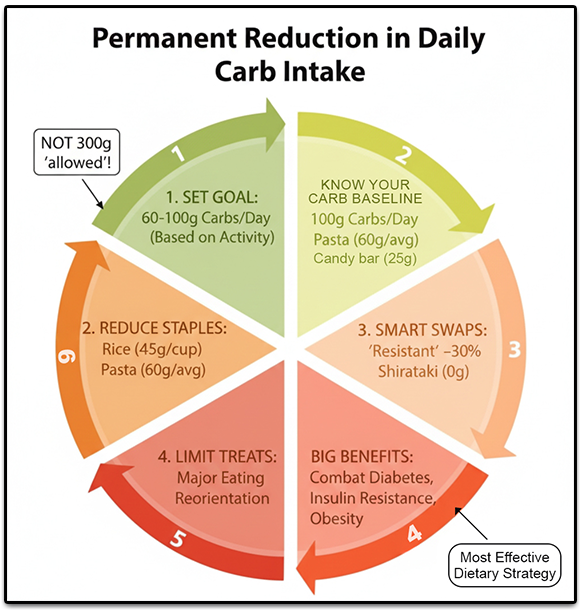
Permanent Reduction in Daily Carb Intake. A+ Aim for 60-100 grams of carbs daily (not the 300 grams supposedly “allowed” in many nutrition charts), depending on how active your lifestyle is. A typical American candy bar has about 25 grams. A cup of cooked rice is 45 grams of carbs, while an average serving of pasta has 60, but this can be reduced by about 30% if the rice is “resistant” (see other entry), and by 100% if you switch to Shirataki. Accomplishing such a carb reduction requires a major reorientation in eating habits but it is the absolute best way to combat diabetes, insulin resistance, and obesity.

Convert your starches into “resistant”. B Our usual starches are rice, potato, pasta, legumes, and baked goods. Freeze any of these overnight after initial cooking or baking, then reheat gently when prepared to eat. The effective carb content will be reduced by 20-30%, by turning it into “digestion-resistant starch”. It will flow through your stomach partly undigested, then reach your small intestine where it will nurture “good” bacteria. Another source of resistant starch is unripe banana.
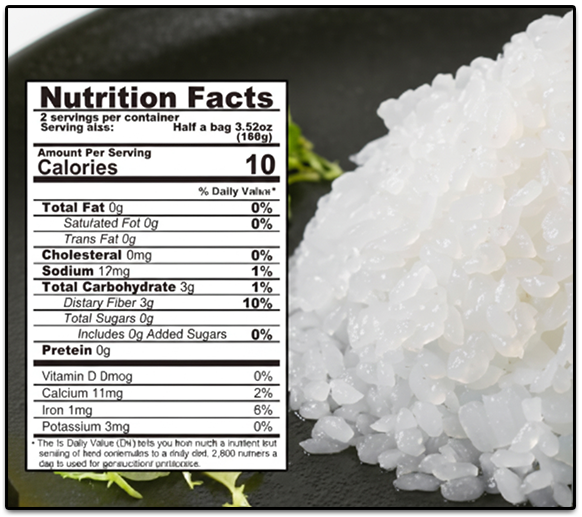
The Alternate Rice. A+ For Asians, rice is the largest source of carbs. Shirataki is derived from Konjac, a plant fiber that has very few carbs, all of which are soluble fiber. Notably, it promotes GLP-1 (like Ozempic). It can be made into rice-like grains or noodle-like shapes. Calories per cooked serving are about 25 vs. 250 for normal rice. Net carbs = practically 0. Shirataki is not as “satisfying” as rice and you may wind up eating more to compensate, but when mixed with pasta sauces and heavy gravies, it is “good enough”, and an easy way to save 2000 calories in a week just by replacing 10 cups of rice weekly with Shirataki. Has a “slimy” feel in mouth, so mask this with gravy or sauce; don’t eat it as is.
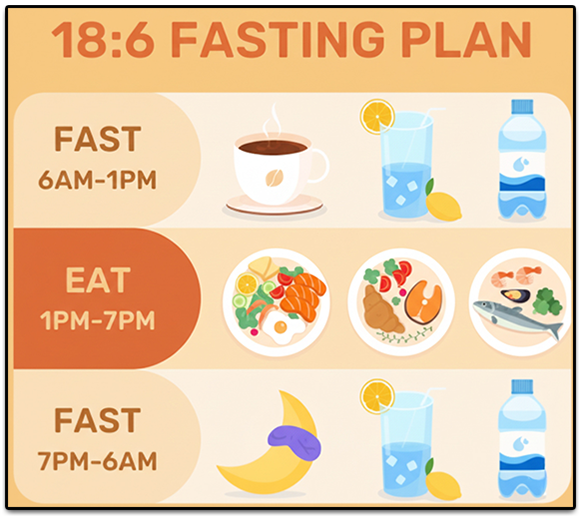
Intermittent Fasting 18/6, Two Meals a Day, Lunch and Early Dinner. A+ if followed correctly. Stop ingestion of all food that might provoke insulin release during an 18 hour period. Fat burning is triggered by the body believing it has run out of spare fuel. Insulin release (which happens when we eat almost anything) tells your body the opposite — food is coming, so no need to burn fat. Long-enough periods without food (15 hours or more) also trigger autophagy, a beneficial process by which defective cells are dis-assembled and re-purposed as metabolic fuel (along with fat in cells). Autophagy on a regular basis may help avoid many diseases of aging.
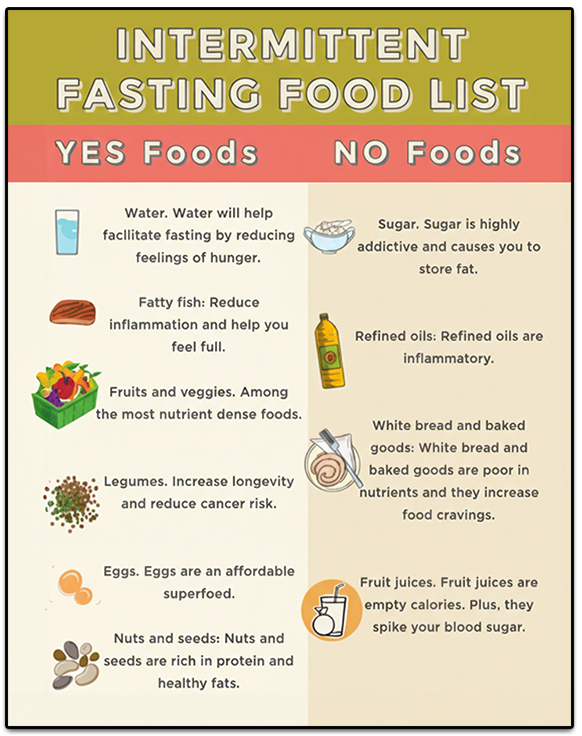
Nothing at all during the Fasting Periods? Only water, tea, and coffee, preferably not even zero-calorie artificial sweeteners. It is possible Allulose (see entry) is permissible, but you will have to determine this for yourself. Absolutely no “little snacks” or “just a taste”. If desperate, okay with diet soda but not too much.
What to Eat during allowed periods: The first food you eat after a fasting period should be high-protein, followed by leafy (non-starchy) vegetable, then possibly a small sweet or fruit. Still try to stay within a target of not more than 60 grams of carbs daily; carb-binging during the “allowed” period renders the
whole process useless.
Drink More Water. A Drink a glass or two on waking, and 15 minutes before each meal drink a glass. Aim for 2 liters a day. This practice will help you feel full throughout the day, and will also help keep your kidneys healthy. Drinking upon waking is especially important, as it will help you eliminate toxins processed while you were asleep.

Stop Snacking. A It’s just a bad habit. Each time you snack between meals, more insulin is released, making you insulin-resistant, which in turn triggers cravings for more snacks. It will not be easy, but you will never manage your weight properly, and you will be setting yourself up for the full set of metabolic diseases, unless you eliminate this habit.
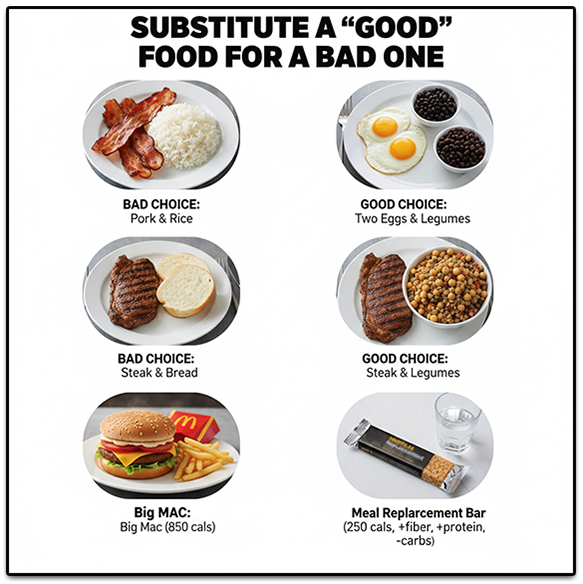
Substitute a “Good” Food for a Bad One. B Eat two eggs instead of pork and a bowl of rice. With meat, have legumes instead of bread. Instead of a Big Mac (850 calories) have a meal replacement bar (250 calories, plus more fiber and protein, fewer carbs). Do this every now and then, and the benefits will add up. To sweeten your coffee or satisfy a sudden sweetness craving, consider: Allulose as a sweetener. Allulose is a naturally-occurring sugar with no calories and (it seems) an ability to release GLP-1, the same hormone through which Ozempic acts. Also consider low-calorie sugar alcohol candies, which are more widely available. In the Philippines, choose Plantation Bay’s Vegan Allulose-Sweetened Ice Cream for a satisfying low-carb dessert; in the US, Halo Top is a delicious low-sugar (but not vegan) ice cream.
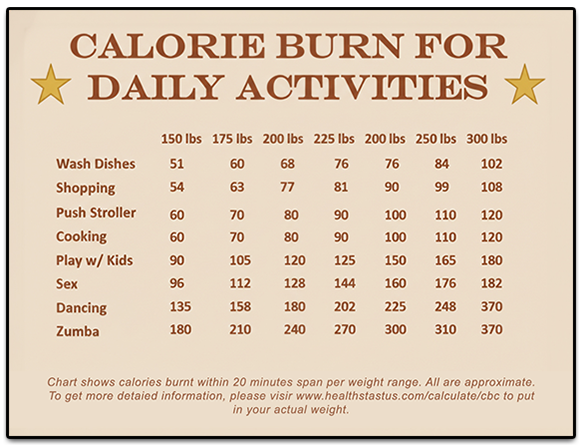
Burn a few extra calories. B Walk up and down 5 extra flights of stairs a day (50 calories); use a stand-up desk without a chair (50 calories in a working day); do 10-minute exercises upon waking (30 calories). If you can do 100 calories more of burn daily, that’s a pound a month.
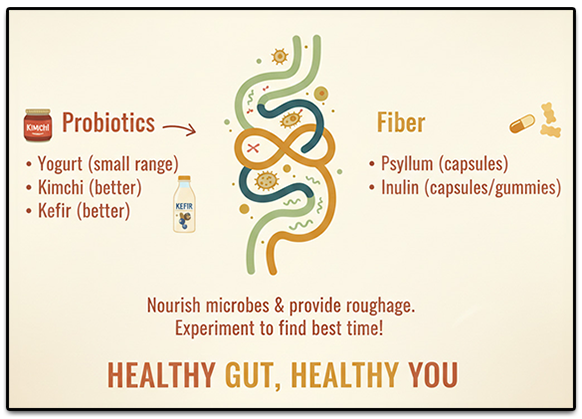
Digestive Health. A+ Requires Good Bacteria (Probiotics) and Food for the microbiome (Prebiotics, Soluble and Insoluble Fiber). Contrary to common belief, yogurt is not a silver bullet. It has only a small range of bacteria; better are kimchi and kefir. Once you have a healthy colony of human gut microbes, it is important to regularly eat both soluble and insoluble fiber to nourish the microbes (and provide roughage). The easiest combination is Psyllium (many capsules available) and Inulin (found in capsules or as pleasant-tasting gummies, just a few calories). By experimentation, find out what time of day is best for the fiber.

One Tablespoon of Peanut Butter Before Sleeping. C Some sources contend that a fat-rich, protein-rich small snack like one tablespoon (not two) of peanut butter prevents a glycemic crash in the middle of the night and raises metabolism in the morning, both of which could on balance counteract the direct cost in calories (90 cals. normal brands, 60 for unsweetened or artificially-sweetened).

Wait Two Hours After Waking Before Eating. Start with protein, not carbs. C There are wildly-varying views on this subject (whether to eat breakfast, when). Plantation Bay is in the “wait 2 hours” camp. Your liver makes glucose during the night even if you’re asleep. If you start the day with a sugary meal, you may cause glycemic spikes. Waiting a little gives you time to burn some of the glucose in your bloodstream, and starting with protein blunts the glycemic effect if you take some sugar/starch.